Ornamental Branch Wreathes: Laurel and Natural Design Elements
The ornamental branch wreath is a timeless symbol that bridges the gap between ancient tradition and modern aesthetic design. Rooted in classical history, these circular arrangements of foliage—most notably laurel leaves, olive branches, and bay foliage—serve as powerful visual metaphors for victory, triumph, and peace. In contemporary design, whether for physical decor or digital vector sets, understanding the nuances of these natural decorative elements is essential for selecting the right style for your project.
Understanding the Symbolism and Design
At its core, a laurel wreath is more than just a collection of leaves; it is a structured composition that conveys specific meanings. Historically, the laurel wreath was awarded to victors in athletic competitions and military campaigns in ancient Greece and Rome. This association with achievement has persisted, making the laurel leaf wreath a staple in academic regalia, corporate logos, and commemorative designs.
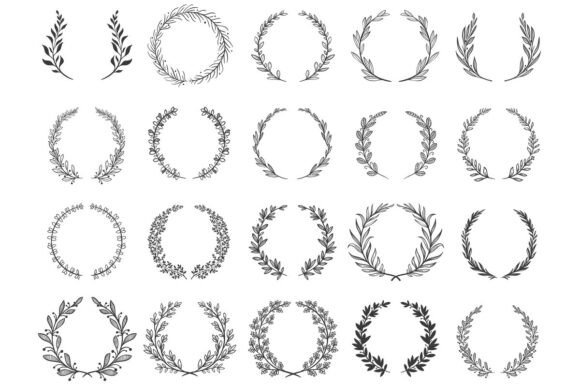
When evaluating ornamental branch wreathes, it is important to distinguish between the types of foliage used. While "laurel" is often used as a catch-all term, designers frequently incorporate olive branches and bay foliage to create varied textures and symbolic layers. Olive branches typically signify peace and reconciliation, while bay foliage adds depth and a richer green tone. A well-designed round floral ornament frame often combines these elements to create a balanced, harmonious look that feels both organic and refined.
Why Choose Ornamental Branch Wreathes?
There are several compelling reasons why individuals and organizations choose laurel and ornamental branch designs over other decorative motifs. The primary driver is often the desire to convey prestige and quality without using overtly commercial language. The visual language of the wreath speaks to heritage and excellence.
- Universal Recognition: The shape and structure of a laurel wreath are instantly recognizable across cultures, reducing the need for explanatory text.
- Versatility: These designs work equally well in monochrome for minimalist branding or in full color for festive decorations.
- Natural Aesthetic: In an era dominated by digital sharpness, the organic curves of bay foliage and olive branches introduce a sense of warmth and humanity.
For those utilizing digital assets, such as a vector set of round floral ornament frames, the scalability of these designs is a significant advantage. Vector graphics allow the intricate details of individual leaves to remain crisp at any size, from a small favicon to a large banner.
Benefits and Practical Applications
The utility of ornamental branch wreathes extends across various industries and use cases. Understanding where these designs fit best can help you determine if they align with your specific goals.
Branding and Identity
Businesses aiming to project an image of established trustworthiness often incorporate laurel wreaths into their logos. This is particularly common in legal firms, educational institutions, and luxury goods manufacturers. The bundle of victory or triumph symbols suggests a track record of success. However, it is crucial to ensure that the design does not feel clichéd. Customizing the leaf shape or arrangement can help maintain a unique brand identity while leveraging the positive associations of the wreath.
Event Decoration and Stationery
In the context of weddings, graduations, and award ceremonies, laurel and olive branch motifs are highly effective. They provide a elegant border for invitations, certificates, and programs. The natural decorative design elements complement both formal and rustic themes. For example, a simple line-art laurel wreath suits modern minimalist weddings, while a detailed, textured bay foliage design fits traditional or vintage-inspired events.
Digital Content and Web Design
Web designers often use ornamental branch wreathes as dividers, header accents, or badge elements. Because these shapes are inherently circular or oval, they frame content effectively, drawing the viewer’s eye to central information such as a testimonial, a special offer, or a key statistic.
Tradeoffs and Considerations
While ornamental branch wreathes offer significant aesthetic and symbolic benefits, they are not without tradeoffs. Evaluating these considerations is vital for making an informed decision.
Risk of Overuse: Due to their popularity, laurel wreaths can sometimes appear generic. If a design relies too heavily on stock vector sets without modification, it may fail to stand out in a crowded market. To mitigate this, consider combining the wreath with unique typography or integrating other personal brand elements.
Complexity vs. Clarity: Highly detailed wreathes with intricate bay foliage and overlapping olive branches can become visually noisy when scaled down. If your primary application involves small formats, such as mobile app icons or social media avatars, a simplified version of the wreath is often more effective. Ensure that the negative space within the wreath is sufficient to maintain legibility.
Cultural Context: While generally positive, the symbolism of victory and triumph can be perceived as aggressive or arrogant in certain contexts. It is important to assess whether the message of "winning" aligns with your brand voice. In collaborative or community-focused environments, emphasizing the olive branch aspect (peace) rather than the laurel aspect (victory) may be more appropriate.
When to Consider Alternatives
There are situations where ornamental branch wreathes may not be the optimal choice. Recognizing these scenarios can save time and resources.
If your goal is to convey innovation, futurism, or technological advancement, traditional botanical elements may feel outdated. In such cases, geometric shapes, abstract lines, or metallic textures might better communicate the desired message. Similarly, for brands targeting a very young demographic, the classical connotations of laurel wreathes might feel distant or irrelevant. Playful illustrations or bold, colorful graphics often resonate more effectively with younger audiences.
Additionally, if your design requires a strict adherence to a specific color palette that clashes with natural greens and earth tones, forcing a laurel wreath into the design may result in visual dissonance. While vector sets allow for color customization, the inherent organic nature of the shape may still conflict with a highly industrial or neon aesthetic.
Making the Right Choice
Selecting the right ornamental branch wreath involves balancing symbolism, aesthetics, and practicality. Start by defining the core message you wish to convey. Is it achievement, peace, elegance, or tradition? Once the message is clear, evaluate the visual complexity required for your medium. For print materials, detailed bay foliage and textured leaves can add richness. For digital interfaces, clean lines and simplified forms ensure clarity.
When sourcing designs, whether purchasing a vector set or commissioning custom artwork, prioritize versatility. Look for files that offer multiple variations—such as complete wreaths, half-wreaths, and individual branches. This flexibility allows you to adapt the elements to different layouts without compromising design integrity.
Ultimately, the laurel and ornamental branch wreath remains a powerful tool in the designer’s arsenal. Its enduring appeal lies in its ability to communicate complex ideas through simple, natural forms. By carefully considering the context, audience, and application, you can leverage these timeless symbols to enhance your visual communication effectively. Whether used to frame a certificate of achievement or to accent a luxury product label, the right wreath design adds a layer of sophistication and meaning that resonates with viewers on both conscious and subconscious levels.