Mastering the Watercolor Gothic Coquette Bow Bundle for High-Quality Designs
The intersection of dark academia aesthetics and soft, romantic coquette trends has created a unique niche in digital design. At the center of this movement is the Watercolor Gothic Coquette Bow Bundle, a collection that blends delicate, hand-painted textures with moody, Victorian-inspired tones. For creators, entrepreneurs, and hobbyists alike, these assets offer a shortcut to producing professional-grade visuals without needing advanced illustration skills. However, simply downloading high-resolution files is not enough to guarantee success. Many users stumble not because the assets are lacking, but because they misunderstand how to integrate them effectively into their workflows.
This guide explores the practical realities of using this specific digital collection. By addressing common pitfalls and offering corrective advice, you can ensure your final products—whether for print-on-demand services or personal projects—meet high standards of quality and appeal.
Understanding the Asset Specifications
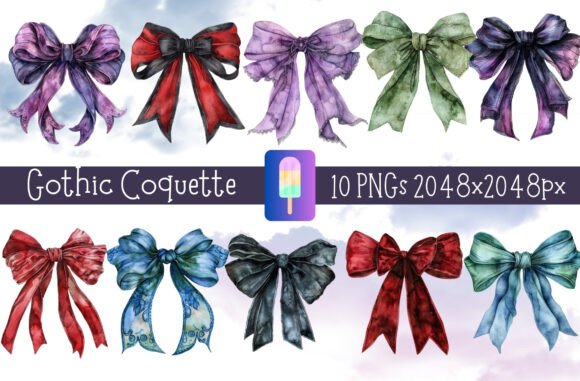
Before diving into design, it is crucial to understand exactly what you are working with. The Watercolor Gothic Coquette Collection provides ten PNG files, each featuring a transparent background and a resolution of 2048 x 2048 pixels. This square format and high pixel density are ideal for versatility, but they come with specific usage implications that are often overlooked by beginners.
A frequent mistake is assuming that "transparent background" means the image is ready for any context without adjustment. While the transparency allows you to layer the bows over other designs, the watercolor texture itself has varying levels of opacity. If you place a dark gothic bow over a busy or dark background without proper blending modes, the details can get lost. Conversely, placing it on a stark white background might make the edges look too sharp if the original watercolor bleed was subtle.
Practical Advice: Always test your PNGs on multiple background colors before finalizing a design. Use layer blending modes like "Multiply" for light backgrounds or "Screen" for dark ones to ensure the watercolor texture interacts naturally with the underlying surface. This small step prevents the "sticker effect," where the graphic looks pasted on rather than integrated into the design.
Common Missteps in Print-on-Demand Applications
One of the primary use cases for this bundle is Print-on-Demand (POD) merchandise, such as t-shirts, mugs, stickers, and tote bags. The promise of easy customization attracts many new sellers, but it also leads to significant errors in file preparation and product selection.
Ignoring Resolution Limits on Large Formats
While 2048 x 2048 pixels is a robust resolution for most standard applications, it is not infinite. A common error is stretching these images to cover entire extra-large t-shirts or large wall art prints. When scaled up beyond their native resolution, watercolor textures can become pixelated or blurry, destroying the delicate aesthetic that makes the gothic coquette style appealing.
Better Approach: Limit the use of these bows to central chest prints on apparel, mug wraps, or sticker designs where the print area remains within the optimal clarity range of the source file. If you need a larger format, consider using the bows as part of a collage rather than a standalone oversized graphic, or invest in vector-based alternatives for massive scales.
Neglecting Color Profile Differences
Digital screens display colors in RGB, while printers use CMYK. The deep, moody tones of the gothic palette—think charcoal grays, muted burgundies, and slate blues—can shift significantly when printed. Beginners often skip the step of checking how these colors translate to physical media, resulting in prints that look washed out or muddy compared to the vibrant preview on their monitor.
Corrective Action: Order a sample product before launching a full campaign. This allows you to see how the watercolor gradients hold up on different fabrics and materials. Adjust brightness and contrast in your editing software if the printed result lacks definition.
Clarifying Licensing and Included Elements
A critical area of confusion involves what is and is not included in the download. The listing clearly states that any mockups, backgrounds, or additional decorative elements shown in promotional images are not included. Despite this, many buyers assume they are purchasing a complete scene or a set of props.
This misunderstanding can lead to wasted time and frustration. A creator might spend hours trying to recreate a lifestyle shot seen in the preview, only to realize they lack the necessary background assets. Furthermore, using copyrighted mockup images from the listing in your own store without permission can lead to intellectual property violations.
Key Checkpoint: Before purchasing, audit your existing asset library. Do you have suitable backgrounds, fonts, and layout tools to complement the ten PNG files? If not, factor in the time and cost of sourcing those additional elements. Treat the bow bundle as a component, not a complete solution.
Enhancing Usability Through Smart Organization
With ten distinct files, organization becomes key to efficiency. Many users dump all files into a single folder and struggle to find the right bow during the creative process. This disorganization slows down workflow and can lead to repetitive design choices, as creators default to the first few files they see.
Strategy for Efficiency: Rename your files descriptively upon download. Instead of "bow1.png," use names like "gothic-lace-bow-dark.png" or "coquette-ribbon-muted-red.png." Create subfolders if you plan to use these assets across multiple projects. This simple administrative step saves hours of searching and helps maintain a consistent brand aesthetic by making it easier to select the most appropriate variant for each design.
Evaluating Fit for Your Niche
Not every audience resonates with the gothic coquette aesthetic. While the trend is popular, applying it indiscriminately to all products can dilute your brand identity. For example, these dark, romantic bows may not suit bright, minimalist, or corporate-themed designs. Trying to force these assets into incompatible niches often results in low engagement and poor sales.
Strategic Alignment: Analyze your target demographic. Are they interested in vintage, literary, or alternative fashion styles? If so, the Watercolor Gothic Coquette Bow Bundle is a strong fit. If your audience prefers modern, tech-forward, or playful cartoon aesthetics, these assets may not yield the desired return on investment. Align your product choices with your audience's visual preferences to maximize impact.
Final Considerations for Quality Assurance
Success with digital assets relies on attention to detail. Always zoom in to 100% view when editing to check for any artifacts or edge issues. Ensure that the transparent edges are clean and free from unwanted halos, which can occur if the original extraction was imperfect. If you notice minor imperfections, use basic photo editing tools to refine the edges before placing them in your final composition.
By approaching the Watercolor Gothic Coquette Collection with a clear understanding of its technical limits, licensing terms, and aesthetic strengths, you can avoid common pitfalls. Focus on integration, respect resolution boundaries, and align your designs with your audience's tastes. These practices will help you create polished, professional products that stand out in a crowded marketplace.