Ornament Easter Bunny Designs: Avoiding Common Pitfalls for Professional Holiday Crafts
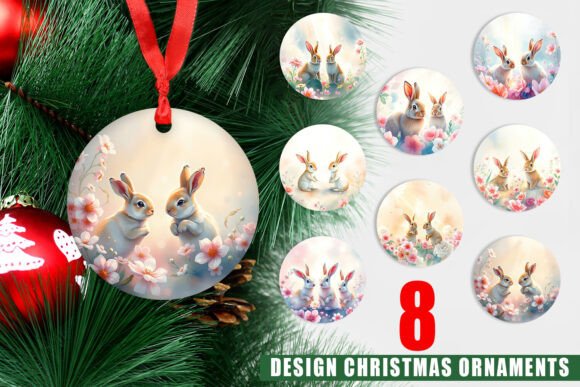
Finding the perfect Ornament Easter Bunny design to bridge the gap between spring festivities and year-round decor can be a delightful creative challenge. Many crafters and small business owners are drawn to the idea of using these whimsical characters on Christmas trees, creating a unique "Christmas in July" or eclectic holiday aesthetic. However, simply downloading a cute image and printing it often leads to disappointing results if you do not understand the technical requirements of high-quality production. When working with a set of 8 circular decorative designs intended for ornaments, the difference between a professional finish and a blurry, pixelated mess often comes down to overlooked details regarding resolution, file formats, and material compatibility.
The core appeal of an Ornament Easter Bunny collection lies in its versatility. These designs allow creators to inject personality into traditional holiday settings. Yet, a frequent misunderstanding arises when users assume that any digital image found online is suitable for physical printing. A common mistake is selecting files based solely on how they appear on a smartphone or computer screen, ignoring the critical specifications needed for print. For instance, a design might look crisp on a retina display but will appear grainy and unprofessional once printed on a ceramic tile or wooden disc if the source file lacks the necessary density.
The Resolution Trap and Why Screen Quality Deceives You
One of the most significant errors beginners make is underestimating the importance of DPI (dots per inch). When you purchase or download a set of Ornament Easter Bunny PNGs, you must verify that the files are truly high resolution. Many free or low-cost resources offer images that are 72 DPI, which is standard for web use but disastrous for print. If you attempt to print a 72 DPI image at 5x5 inches, the printer has to stretch the limited data, resulting in jagged edges and loss of detail. This is particularly noticeable with intricate line work often found in bunny illustrations.
To avoid this, always ensure your files meet the industry standard of 300 DPI. In a professional set, such as one containing 8 circular designs at 1500x1500 pixels, this resolution ensures that every whisker and floral accent remains sharp when scaled to a 5-inch ornament. Before committing to a purchase or starting a production run, check the file properties. If the dimensions are smaller than 1500x1500 pixels for a 5-inch output, the quality will likely suffer. Remember, you can always scale a high-resolution image down, but you cannot scale a low-resolution image up without losing quality.
Understanding File Formats and Background Transparency
Another area where creators often stumble is the choice of file format. While JPEGs are common, they are rarely the best choice for cutting out shapes or layering designs onto colored backgrounds. JPEGs do not support transparency, meaning your Ornament Easter Bunny will come with a solid white box around it. This forces you to manually remove the background, a time-consuming process that often leaves rough edges or halos around the subject.
The superior choice for ornament projects is the PNG format with a transparent background. High-quality sets provide these files ready to use, allowing you to place the bunny design directly onto a red, green, or gold ornament base without unsightly white borders. When evaluating a design pack, preview the images against different colored backgrounds. If the seller only shows them on white, ask for a sample with transparency before buying. Using the correct format not only saves hours of editing time but also ensures a seamless, professional integration with your chosen substrate, whether it is glass, wood, or metal.
Material Compatibility and Color Management
Even with the perfect file, the final result depends heavily on the material you choose for your ornaments. A mistake many entrepreneurs make is assuming that colors on their monitor will match the printed output exactly. Monitors use RGB (light) to display color, while printers use CMYK (ink). Bright neon greens or electric blues that pop on a screen may print as dull or muddy if not managed correctly. This is crucial for Ornament Easter Bunny designs that rely on pastel spring tones; these can easily get lost if the printer profile is not calibrated.
Furthermore, consider the texture of your ornament surface. Printing on glossy ceramic requires different ink settings than printing on porous wood or fabric. If you are using sublimation, ensure your PNGs are mirrored before printing, or your text and directional elements will be backward. For inkjet transfers, verify that the design includes enough margin for the transfer tape. A practical approach is to run a test print on a cheap, similar material before committing to your entire inventory. This simple step prevents wasted materials and ensures the vibrant colors of your bunny designs translate accurately to the physical product.
Maximizing the Value of a Design Set
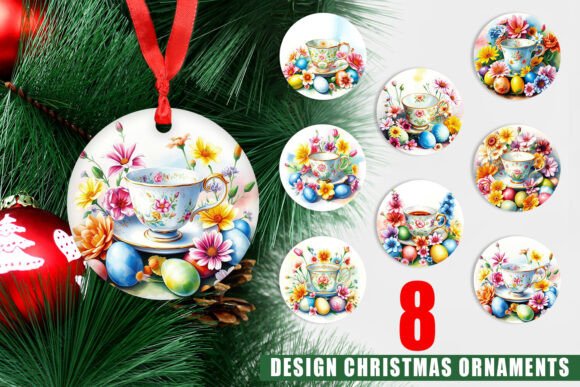
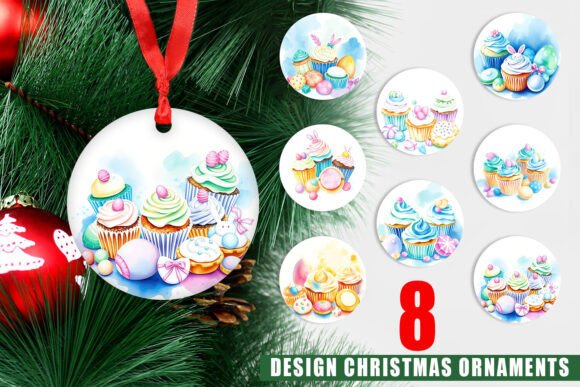
When you acquire a set of 8 circular decorative designs, the goal should be cohesion and variety. A common oversight is using all eight designs in the exact same way, which can make a product line feel repetitive. Instead, think about how these Ornament Easter Bunny graphics can be mixed and matched. Perhaps three designs work best as standalone centerpieces on large baubles, while the other five serve as accents on smaller tags or gift boxes.
Creativity also extends to the application method. Do not limit yourself to just printing. These high-resolution PNGs can be used for vinyl cutting, laser engraving (if converted to vector paths properly), or even as stencils for hand-painting. By diversifying your application methods, you increase the perceived value of your crafts. For educators and hobbyists, this variety offers excellent opportunities for workshops where participants can choose different techniques for the same set of assets.
Checklist Before You Start Creating
Before you begin your next project, take a moment to review your assets and plan. Ensuring you have the right tools and files will streamline your workflow and elevate the quality of your final products. Here are the essential checks to perform:
- Verify Resolution: Confirm all files are 300 DPI and at least 1500x1500 pixels for 5-inch prints.
- Check Transparency: Open the PNGs in an editor to ensure the background is truly transparent and not just white.
- Test Print: Run a single test on your specific material to check color accuracy and ink adhesion.
- Review Licensing: If you are selling the finished ornaments, ensure the license allows for commercial use of the Ornament Easter Bunny designs.
- Plan Your Layout: Arrange the 8 designs to see how they look together, ensuring a balanced mix of colors and compositions.
By paying attention to these technical and creative details, you transform a simple digital download into a high-quality, tangible product. The Ornament Easter Bunny theme offers a charming twist to traditional decor, but its success relies on the precision of your execution. Whether you are a seasoned professional or a weekend hobbyist, respecting the nuances of resolution, format, and material will ensure your creations stand out for all the right reasons.