Hand Drawn Ribbon and Swirl Frame: A Practical Guide to Decorative Borders
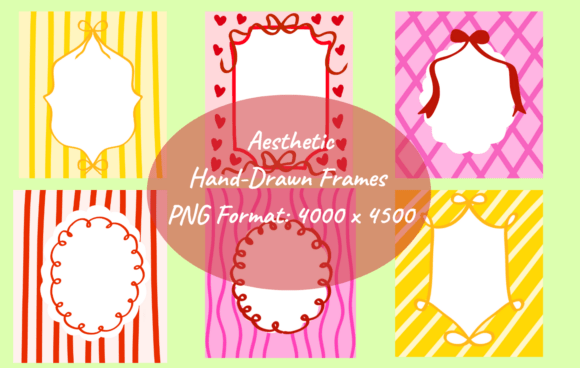
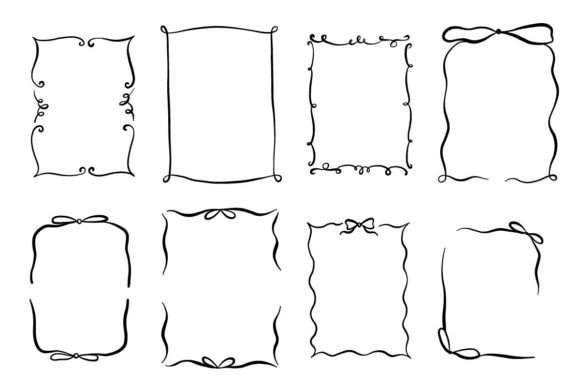
In the world of digital design, the choice of framing elements can significantly influence the perceived tone and professionalism of a project. The Hand Drawn Ribbon and Swirl Frame collection represents a specific niche within graphic resources, offering a blend of elegance and playfulness that is difficult to replicate with standard geometric tools. This set, comprising nine distinct hand-drawn frames featuring ribbon bows, wavy lines, scallops, and swirl accents, serves as a versatile asset for designers seeking to add a personal, organic touch to their work. Understanding when and how to utilize these assets requires a clear evaluation of their stylistic strengths, technical formats, and how they compare to other available design solutions.
Defining the Aesthetic: Organic vs. Geometric Precision
The primary distinction of the Hand Drawn Ribbon and Swirl Frame lies in its intentional imperfection. Unlike vector shapes generated by software algorithms, which offer mathematical precision and uniformity, hand-drawn elements carry the subtle irregularities of human creation. This includes slight variations in line weight, natural curves in the ribbons, and asymmetrical balance in the swirls. For audiences aged 20 to 50 who are curating brand identities or personal projects, this aesthetic signals authenticity and warmth.
When comparing this style to rigid, geometric borders, the tradeoff becomes clear. Geometric frames are ideal for corporate reports, technical manuals, or modern minimalist interfaces where clarity and order are paramount. In contrast, the Hand Drawn Ribbon and Swirl Frame excels in contexts that benefit from a softer, more inviting atmosphere. It is particularly effective for wedding invitations, boutique packaging, lifestyle blogs, and educational materials for younger audiences. The inclusion of ribbon bows and scallops adds a layer of traditional decorative flair, while the wavy lines and swirls introduce a sense of movement and whimsy.
Evaluating File Formats: EPS, SVG, PNG, and JPG
A critical factor in choosing any digital asset is its technical versatility. This collection is provided in a ZIP file containing EPS, JPG, PNG, and SVG formats. Each format serves a different purpose in the design workflow, and understanding these differences is essential for maximizing the value of the resource.
- EPS (Encapsulated PostScript): This is the preferred format for professional print design. As a vector file, it allows for infinite scaling without loss of quality. Designers using Adobe Illustrator or similar software can edit the anchor points, adjust the stroke width, and change colors to match specific brand palettes. This makes the Hand Drawn Ribbon and Swirl Frame highly adaptable for large-format printing, such as banners or signage.
- SVG (Scalable Vector Graphics): Ideal for web development and digital interfaces, SVG files maintain crisp edges on all screen resolutions. They are lightweight and can be manipulated via CSS, allowing developers to animate the swirls or change colors dynamically. For those building responsive websites or interactive e-cards, this format offers significant advantages over raster images.
- PNG (Portable Network Graphics): With support for transparency, PNGs are perfect for overlaying frames onto photographs or textured backgrounds without a white box appearing around the edges. This is crucial for social media graphics, digital invitations, and blog headers where the background needs to remain visible.
- JPG (Joint Photographic Experts Group): While less flexible due to the lack of transparency and vector capabilities, JPGs are universally compatible and suitable for quick previews or simple documents where editing is not required.
The availability of all four formats ensures that the Hand Drawn Ribbon and Swirl Frame can be integrated into both print and digital workflows seamlessly. This multi-format approach reduces the need for additional conversion tools, saving time and preserving quality.
Comparative Analysis: Hand-Drawn Assets vs. Template Generators
Designers often face a choice between purchasing curated asset packs like this one and using automated template generators or stock photo libraries. Each approach has distinct benefits and limitations.
Automated template generators offer speed and convenience, providing pre-made layouts that can be populated with text and images. However, they often lack uniqueness, leading to a "cookie-cutter" appearance that may dilute brand identity. Furthermore, customization options are typically limited to predefined parameters. In contrast, the Hand Drawn Ribbon and Swirl Frame provides raw creative elements. While this requires more effort to integrate into a layout, it allows for complete creative control. Designers can rotate, resize, combine, or modify individual components to create a unique composition that aligns precisely with their vision.
Stock photo libraries offer high-quality images but rarely provide editable vector elements. If a designer needs a specific ribbon configuration or a particular swirl pattern, finding an exact match in a stock library can be time-consuming. With a dedicated set of nine hand-drawn frames, the variety is curated and consistent in style, ensuring visual harmony across multiple design pieces. This consistency is vital for maintaining a cohesive brand image across various touchpoints, from business cards to social media posts.
Best-Fit Scenarios and Limitations
Identifying the right context for using the Hand Drawn Ribbon and Swirl Frame is key to achieving effective design outcomes. These frames are best suited for projects that aim to evoke feelings of nostalgia, elegance, celebration, or creativity. Specific use cases include:
- Event Stationery: Wedding invitations, baby shower announcements, and birthday cards benefit from the decorative nature of ribbon bows and scallops. The elegant style adds a touch of sophistication, while the playful swirls keep the tone joyful.
- Boutique Branding: Small businesses in the beauty, fashion, or handmade goods sectors can use these frames to highlight product features or testimonials on their websites and packaging. The organic feel aligns well with artisanal and personalized brand values.
- Educational Content: Teachers and content creators can use the playful elements to frame important information, quotes, or activities in worksheets and presentations, making them more engaging for students.
However, there are limitations to consider. The intricate details of the hand-drawn lines may not reproduce well at very small sizes, such as on mobile favicons or tiny icons. In such cases, simpler geometric shapes might be more effective. Additionally, the decorative nature of these frames can clash with ultra-modern, industrial, or minimalist design aesthetics. If the overall design language is stark and functional, adding ornate ribbons and swirls may create visual dissonance rather than enhancement.
Making an Informed Decision
When evaluating whether the Hand Drawn Ribbon and Swirl Frame is the right resource for your project, consider the following decision factors:
- Brand Personality: Does your brand or project benefit from a warm, personal, and slightly traditional aesthetic? If yes, these frames are a strong fit. If your brand is tech-focused or strictly corporate, alternative options may be more appropriate.
- Technical Requirements: Do you need editable vector files for print or web customization? The inclusion of EPS and SVG formats makes this set a valuable investment for professionals who require flexibility.
- Time vs. Control: Are you willing to invest time in customizing and integrating individual elements to achieve a unique look? If you prioritize speed over uniqueness, automated templates might be preferable. If you value distinctiveness and creative control, this asset pack offers superior value.
In conclusion, the Hand Drawn Ribbon and Swirl Frame collection offers a balanced solution for designers seeking to add character and elegance to their projects. By understanding its stylistic nuances, technical capabilities, and appropriate use cases, you can make an informed decision that enhances your design workflow and achieves your desired aesthetic outcomes. Whether you are creating invitations, branding materials, or digital content, these hand-drawn elements provide a versatile and charming foundation for creative expression.