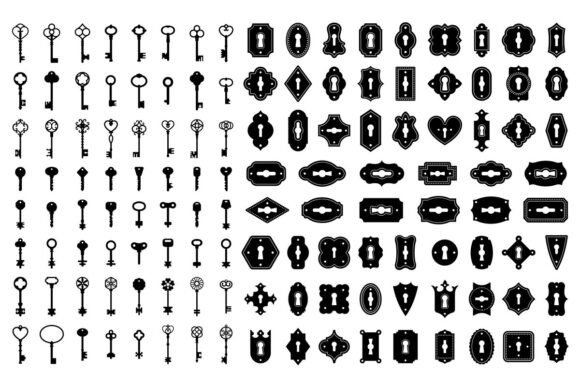
Evaluating Key and Keyhole Silhouettes for Old House Design Projects
In the realm of architectural illustration, graphic design, and historical restoration, visual elements serve as more than mere decoration; they communicate era, function, and aesthetic intent. Key and Keyhole Silhouettes: Old House represents a specific niche of digital assets that capture the intricate details of vintage locking mechanisms. These collections typically include vector sets of antique door keys, ornate keyhole frames, and retro silhouette icons. For designers, historians, and homeowners engaged in restoration projects, understanding the utility and application of these silhouettes is essential for achieving authentic visual storytelling.
Understanding the Asset Collection
A typical collection of Key and Keyhole Silhouettes focuses on the distinct shapes and decorative patterns found in pre-modern hardware. Unlike contemporary locks, which prioritize minimalism and uniformity, older mechanisms featured elaborate escutcheons, varied bitting patterns on keys, and unique keyway profiles. These digital assets are usually provided in vector formats, allowing for infinite scalability without loss of quality. This technical characteristic is crucial for applications ranging from small web icons to large-scale print materials such as signage or wallpaper patterns.
The "Old House" designation implies a focus on historical accuracy or stylistic homage to periods such as Victorian, Edwardian, or Colonial eras. The silhouettes often highlight the contrast between the solid metal of the key and the negative space of the keyhole, creating a strong visual identity that is instantly recognizable as vintage or antique.
Reasons for Interest and Application
Interest in these silhouettes generally stems from three primary motivations: historical authenticity, decorative elegance, and symbolic representation.
- Historical Restoration and Documentation: Architects and preservationists may use these vectors to create accurate diagrams for restoration plans. When original hardware is missing, silhouettes can help visualize potential replacements that match the home’s period style.
- Graphic Design and Branding: Businesses in the real estate, antique dealing, or locksmith industries often incorporate these images into their branding. The imagery evokes trust, security, and heritage, which are valuable associations for these sectors.
- Interior Design and Decor: DIY enthusiasts and interior designers use these motifs for wall art, stencils, or custom furniture detailing. The intricate lines of vintage keys provide a sophisticated decorative element that complements traditional or eclectic interiors.
Benefits of Using Vector Silhouettes
Choosing a high-quality vector set of old house door keys and vintage lock keyholes offers several practical advantages over using raster images or photographs.
First, versatility is paramount. Vector files can be resized to fit any dimension, ensuring crisp edges whether used on a business card or a building facade. Second, editability allows designers to modify colors, line weights, and compositions to suit specific project requirements. This flexibility is particularly useful when matching a specific color palette or integrating the silhouette into a larger composite image.
Furthermore, these collections often provide a variety of shapes and styles within a single package. A comprehensive set might include skeleton keys, warded locks, and lever tumbler profiles, offering a broad range of options for different historical contexts. This diversity saves time compared to sourcing individual images from disparate libraries.
Tradeoffs and Considerations
While beneficial, relying on pre-made silhouette collections involves certain tradeoffs. The primary consideration is historical precision. Not all "vintage" vectors are created equal; some may blend stylistic elements from different eras inaccurately. For rigorous historical documentation, it is necessary to verify that the selected silhouettes align with the specific time period of the house or object being represented.
Another factor is uniqueness. Popular vector sets may be widely used, potentially leading to generic visuals if not customized. Designers must consider how to manipulate these assets to create a distinct look, perhaps by combining multiple elements or altering the composition significantly.
Additionally, the level of detail in a silhouette can impact its legibility. Highly intricate designs may lose clarity when scaled down for small applications like favicons or mobile app icons. In such cases, simpler, more modernized interpretations of antique keys may be more effective.
Situations Where It Is a Strong Fit
Key and Keyhole Silhouettes: Old House assets are particularly well-suited for projects where atmosphere and heritage are central themes. For example, a marketing campaign for a historic bed and breakfast benefits greatly from the nostalgic appeal of antique key imagery. Similarly, educational materials about local history or architectural evolution can use these visuals to illustrate changes in security technology over time.
In interior design, these silhouettes work well in spaces that embrace a "grandmillennial" or traditional aesthetic. Using them as motifs in wrought iron gates, cabinet hardware, or framed art pieces reinforces the connection to the past. They are also effective in wedding invitations or event stationery for venues located in historic buildings, providing a cohesive thematic element.
When to Consider Alternatives
There are scenarios where these vintage silhouettes may not be the optimal choice. Modern minimalist design trends often favor clean lines and abstract forms, making ornate antique keys appear cluttered or out of place. In such contexts, contemporary lock icons or simplified geometric shapes may better align with the overall design language.
Furthermore, if the goal is photorealism, vector silhouettes are insufficient. High-resolution photography of actual hardware captures texture, material finish, and wear patterns that vectors cannot replicate. For product catalogs or detailed forensic analysis, photographic evidence remains superior.
For projects requiring strict legal or security compliance, such as official government documents or high-security branding, generic vintage keys may convey an unintended sense of obsolescence or vulnerability. In these cases, modern, robust locking imagery or abstract security symbols are more appropriate.
Practical Decision-Making Insights
When evaluating whether to incorporate retro key silhouette icon vector sets into a project, consider the following steps:
- Define the Era: Identify the specific historical period relevant to your project. Ensure the selected silhouettes reflect the hardware styles of that era, such as the ornate brass keys of the Victorian age versus the simpler iron keys of earlier colonial periods.
- Assess Scalability Needs: Determine the primary use cases for the images. If small-scale digital use is predominant, test the silhouettes at reduced sizes to ensure legibility. Simplify complex designs if necessary.
- Check Licensing and Usage Rights: Verify that the vector set allows for the intended commercial or personal use. Some collections may have restrictions on redistribution or modification.
- Evaluate Customization Potential: Choose assets that are easy to edit. Layered vector files allow for greater creative control, enabling you to isolate specific components like the key bow or the bitting.
Ultimately, the decision to use Key and Keyhole Silhouettes: Old House depends on the balance between aesthetic goals and functional requirements. These assets offer a powerful way to evoke history and elegance, but their effectiveness relies on thoughtful selection and application. By understanding the strengths and limitations of these digital tools, designers and homeowners can make informed choices that enhance their projects while maintaining historical integrity and visual coherence.
For those seeking to blend tradition with modern design, these silhouettes provide a bridge between the past and present. They allow for the celebration of craftsmanship and heritage in a format that is adaptable to contemporary media. Whether used for subtle decorative touches or as central design elements, vintage key and keyhole imagery remains a timeless choice for those who value the stories embedded in old houses and their hardware.